The waters surrounding Hokkaido are among the most productive fishing grounds in the North Pacific. Cold, nutrient-rich currents support an extraordinary diversity of marine life, and Hokkaido’s fishing industry remains one of the largest in Japan. For visitors, this translates into seafood experiences that are measurably fresher and more diverse than what is available in most of the country — the morning markets in Hakodate and Sapporo serve fish that was in the ocean hours, not days, earlier.
Uni (Sea Urchin)
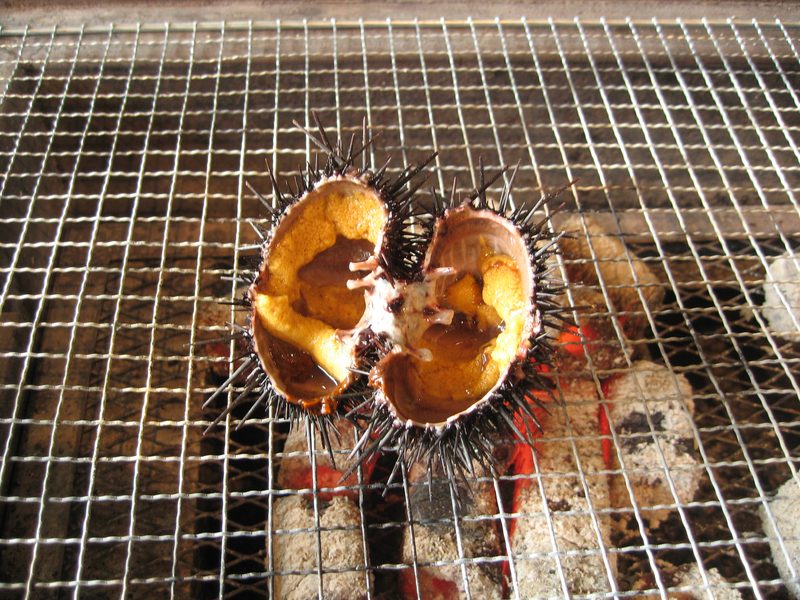
Hokkaido produces Japan’s finest uni, and the quality difference between Hokkaido uni and what is commonly available elsewhere is substantial. Fresh Hokkaido uni is creamy, sweet, and ocean-clean, without the bitterness or ammonia notes that characterise lower-quality product. The best uni comes from the northern and western coasts, particularly Shakotan, Rishiri, and Rebun Island.
Two varieties are available: murasaki uni (purple sea urchin), which is more common and has a lighter flavour, and bafun uni, which is smaller, richer, and more intensely flavoured. Bafun uni from Hokkaido is considered among the finest in the world.
Peak season: June through August for bafun uni; murasaki uni available slightly longer.
Where to eat: Morning markets in Hakodate and Sapporo; sushi restaurants across Hokkaido; specialist seafood restaurants in Shakotan (summer only).
Price: A uni-don (uni rice bowl) at a morning market costs approximately ¥2,500–¥4,500 depending on quantity and variety.
Ikura (Salmon Roe)
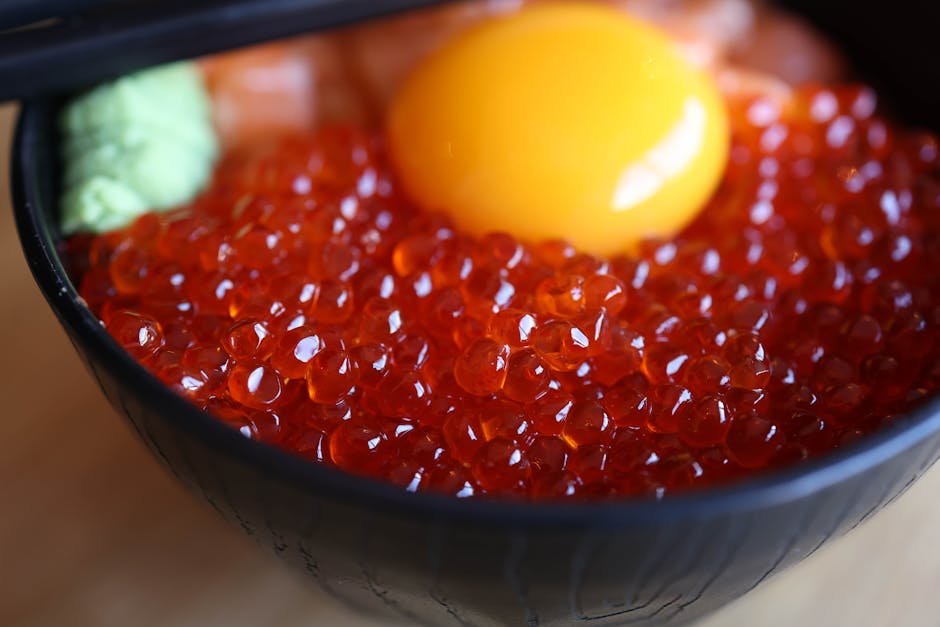
The glistening orange pearls of salmon roe are one of Hokkaido’s most recognisable food products. Fresh ikura has a delicate pop when bitten, releasing a wash of salty-sweet flavour. In Hokkaido, ikura is typically marinated in soy sauce and sake (shoyu-zuke), which adds savoury depth to the natural brininess.
The autumn salmon run (September through November) brings the freshest roe, and the difference between fresh-season ikura and frozen product is notable. Served generously over hot rice as ikura-don, it is one of the most satisfying single bites in Japanese cuisine.
Peak season: September through November.
Where to eat: Morning markets (both Hakodate and Sapporo serve exceptional ikura-don); kaisen-don shops; sushi restaurants.
Price: Ikura-don at a market stall: ¥1,800–¥3,000.
Scallops (Hotate)
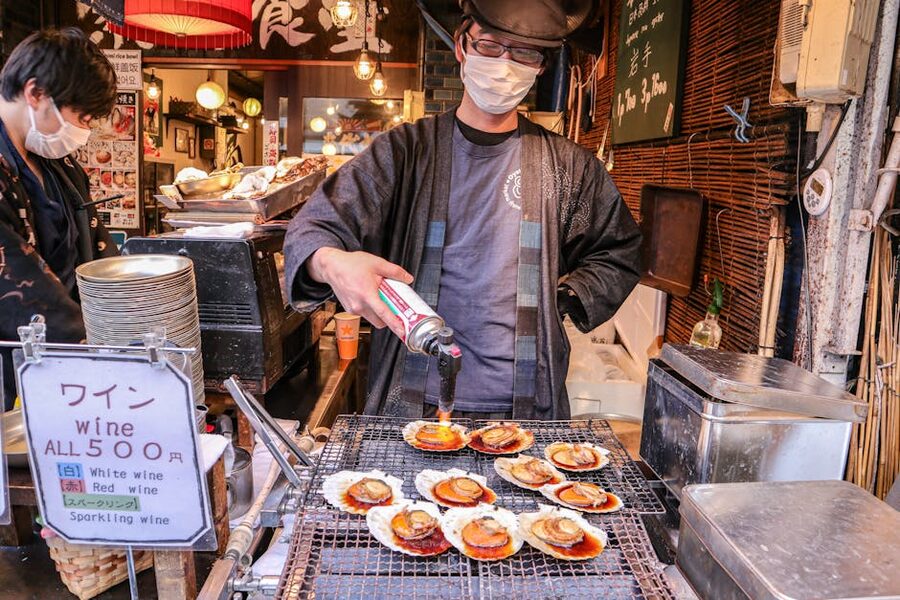
Hokkaido produces approximately 80% of Japan’s scallop harvest. The cold northern waters, particularly around Saroma Lake and Sarufutsu in the north, produce scallops that are larger, sweeter, and more tender than those from warmer regions. Hokkaido scallops are exported across Asia and command premium prices in markets from Tokyo to Hong Kong.
Served raw as sashimi, the quality is immediately apparent — the texture is firm but yielding, and the sweetness is pronounced. Grilled scallops (often with butter and soy sauce) are a popular street food at markets and festivals.
Peak season: Year-round, with slight quality peaks in winter and spring.
Where to eat: Everywhere in Hokkaido. Markets, sushi restaurants, izakayas, and even convenience stores sell Hokkaido scallop products.
Squid (Ika)
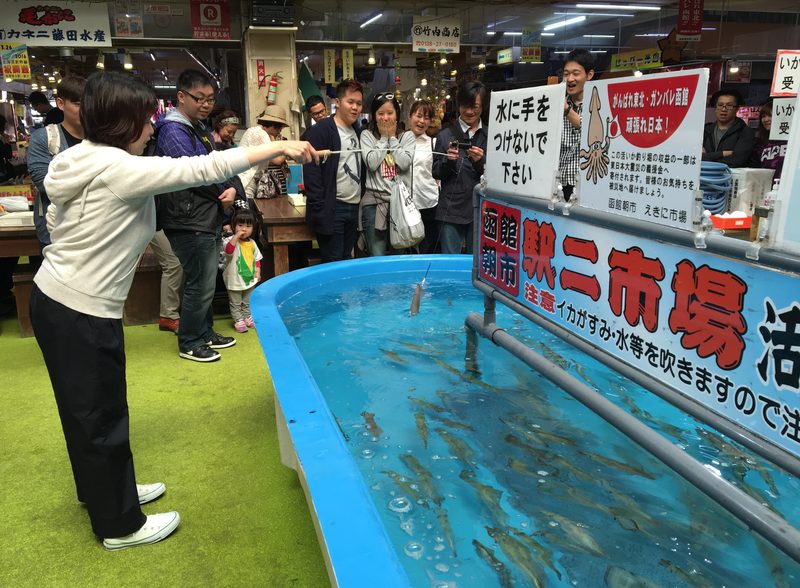
Hakodate is synonymous with squid in Japanese food culture. The city’s squid fishing fleet has operated for centuries, and fresh Hakodate squid — served as sashimi so fresh it is still translucent and slightly moving — is one of Hokkaido’s most distinctive eating experiences. The texture of truly fresh squid sashimi (ika-somen, cut into thin noodle-like strips) is unlike anything available more than a few hours from the ocean.
Peak season: June through December, with summer squid considered finest.
Where to eat: Hakodate Morning Market is the definitive location. Several stalls offer live squid fishing where you catch and eat your own.
Salmon (Sake/Samon)
The autumn salmon run in Hokkaido’s rivers is a significant natural and cultural event. Wild Hokkaido salmon, particularly from the rivers of eastern Hokkaido, has a flavour profile distinct from farmed salmon — firmer texture, less fat, and a cleaner taste. Beyond the fish itself, the roe (ikura) and the practice of watching salmon fight upstream during the run are part of the broader salmon experience.
Ishikari nabe, a miso-based hot pot featuring fresh salmon, vegetables, and tofu, is the traditional Hokkaido preparation and one of the island’s defining comfort foods.
Peak season: September through November for wild salmon; farmed available year-round.
Where to eat: Ishikari (north of Sapporo) for traditional ishikari nabe; sushi restaurants for sashimi; markets for prepared products.
Kaisen-don: The Seafood Rice Bowl
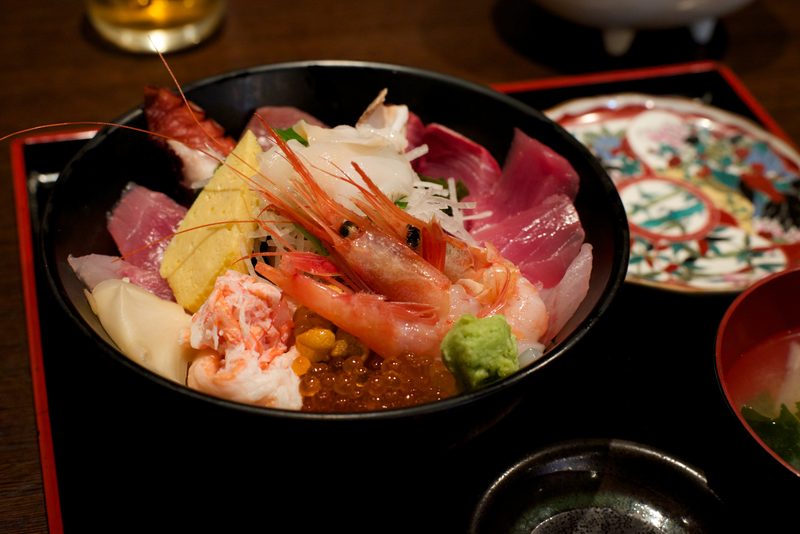
The most accessible way to experience Hokkaido’s seafood diversity in a single sitting is through kaisen-don — a bowl of rice topped with an assortment of fresh sashimi. Most morning market stalls and dedicated kaisen-don restaurants allow you to choose your own toppings from a display case, building a custom bowl. Common options include uni, ikura, crab, scallop, salmon, shrimp, tuna, squid, and seasonal catches.
Prices range from approximately ¥1,500 for a basic three-topping bowl to ¥5,000+ for premium selections loaded with uni and crab.
Where to Eat Seafood in Hokkaido
| Location | Best For | Hours |
|---|---|---|
| Hakodate Morning Market | Squid sashimi, kaisen-don, live squid fishing | ~05:00–12:00 |
| Sapporo Nijo Market | Kaisen-don, crab, convenient central location | ~07:00–18:00 |
| Otaru Sankaku Market | Sushi-grade fish, kaisen-don, less crowded | ~08:00–17:00 |
| Otaru Sushi Street | Counter sushi with Sea of Japan fish | Lunch and dinner |
| Kushiro Washo Market | Build-your-own kaisen-don (katte-don) | ~08:00–17:00 |
Seasonal Calendar
| Species | Jan | Feb | Mar | Apr | May | Jun | Jul | Aug | Sep | Oct | Nov | Dec |
|---|---|---|---|---|---|---|---|---|---|---|---|---|
| Uni (bafun) | * | * | * | |||||||||
| Ikura | * | * | * | |||||||||
| King crab | * | * | * | * | ||||||||
| Snow crab | * | * | * | * | * | |||||||
| Horsehair crab | * | * | * | * | ||||||||
| Squid | * | * | * | * | * | * | ||||||
| Salmon | * | * | * | |||||||||
| Scallops | * | * | * | * | * | * | * | * | * | * | * | * |
* indicates peak season / best quality