Japan runs on cash. That’s the honest summary, and it’s still largely true even as contactless payments and QR codes slowly gain ground. You’ll find card readers at major hotels and department stores, but the ramen shop down the street, the farm stand selling Hokkaido melon, the rural onsen inn — these places expect yen in hand. Don’t arrive thinking your Visa will cover everything. It won’t.
That said, things are changing. The 2020 Olympics pushed a wave of payment infrastructure upgrades, and Hokkaido’s tourist industry has kept pace better than some rural regions. Cities like Sapporo, Hakodate, and Otaru have reasonable card acceptance, especially in hotels and larger restaurants. But the moment you head into the countryside — Furano, Biei, the Shakotan Peninsula — cash becomes essential again.
The practical rule: always have at least ¥10,000–¥15,000 on you. More if you’re heading somewhere remote.
What Things Actually Cost in Hokkaido
Budget Travel (¥6,000–¥10,000/day)
Staying in hostel dorms or guesthouses (¥2,500–¥4,000/night), eating at convenience stores, ramen shops, and set-lunch deals, using the subway and local buses rather than taxis or rental cars. A bowl of Sapporo miso ramen runs ¥850–¥1,200. Convenience store onigiri cost ¥120–¥180 each. A day’s meals can easily come in under ¥2,000 if you’re disciplined about it.
Mid-Range Travel (¥15,000–¥30,000/day)
Business hotels or mid-range ryokan (¥8,000–¥15,000/night), one proper sit-down dinner, a few local transit rides or a day’s car rental. Expect to pay ¥1,500–¥3,000 for dinner at a decent restaurant, ¥6,000–¥12,000 for a car rental day (before fuel and tolls), and ¥210–¥500 per subway or bus ride depending on distance.
Luxury Travel (¥40,000+/day)
High-end ryokan with meals included (¥30,000–¥60,000+ per person per night is common at top properties), kaiseki dinners, Niseko ski passes (¥8,000–¥12,000/day depending on season), and private transfers.
Common One-Off Costs
- Sapporo subway single ride: ¥210–¥380
- Airport express (Sapporo to New Chitose): ¥1,150
- Day ski pass (Niseko): ¥8,000–¥12,000
- Sapporo Snow Festival admission: free
- Farm Tomita entrance (Furano): free
- Beer at a local izakaya: ¥500–¥700
- Hokkaido soft-serve ice cream: ¥400–¥600
How Much Cash to Carry
For a day in Sapporo with the subway and a few meals, ¥10,000 is a comfortable buffer. For a day trip outside the city, carry ¥20,000 minimum. If you’re heading to a remote area — say, a few days in the Daisetsuzan backcountry or a small fishing village — withdraw enough to cover your entire stay before you go. ATMs in rural Hokkaido exist, but they’re not always convenient or foreigner-friendly.
ATMs
Not all Japanese ATMs accept foreign cards. This trips up a lot of first-time visitors. Standard Japanese bank ATMs at branches often reject international cards entirely. The reliable options:
7-Eleven ATMs (Seven Bank)
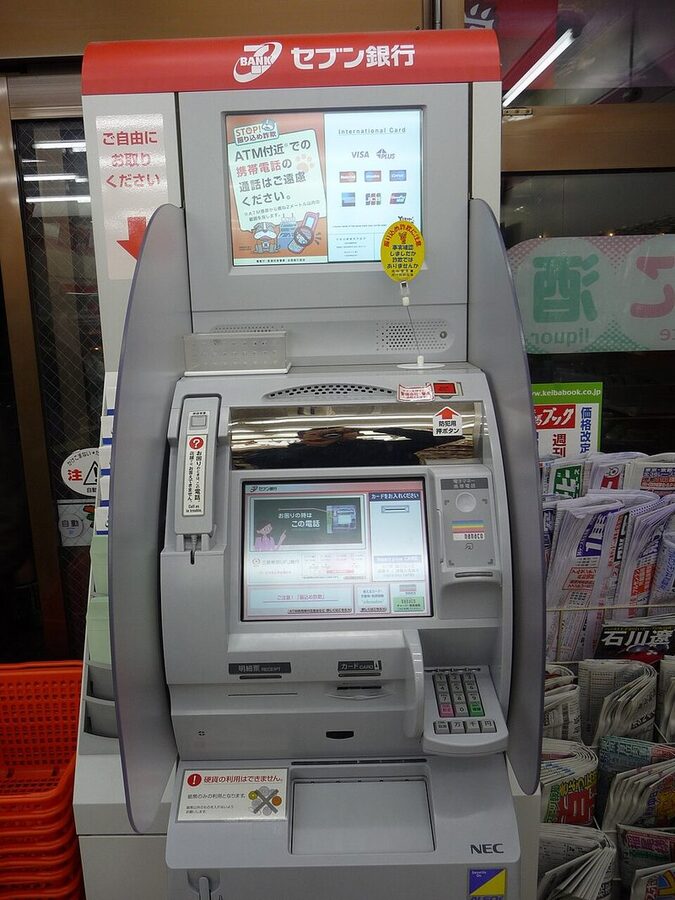
The most reliable option. 7-Eleven convenience stores are everywhere in Hokkaido, and their ATMs accept Visa, Mastercard, Maestro, Cirrus, American Express, and UnionPay. The interface switches to English. Fees run about ¥110–¥330 per withdrawal depending on your home bank’s charges; Seven Bank itself charges around ¥220 for international transactions. Withdrawal limits are typically ¥50,000 per transaction, with a daily limit around ¥100,000.
Japan Post ATMs (JP Bank)
Found at post offices throughout Hokkaido, including in rural areas where 7-Elevens are sparse. Accepts most international cards. Post offices keep standard hours (weekdays roughly 9am–5pm), though ATM lobbies may be accessible longer.
Lawson ATMs
Another solid option. Lawson convenience stores are common in Sapporo and Hokkaido’s larger towns, and their ATMs accept foreign cards with an English interface.
Airport and Station ATMs
New Chitose Airport has multiple Seven Bank ATMs accessible after you clear customs — a sensible place to make your first withdrawal before heading into Sapporo.
Tip: Withdraw in larger amounts to minimise per-transaction fees. A single ¥50,000 withdrawal is more cost-efficient than five ¥10,000 withdrawals. Notify your bank before travel — many fraud detection systems will block the first Japanese ATM transaction without a heads-up.
Credit and Debit Cards
Card acceptance has improved, particularly in Sapporo. Large hotels, department stores (Daimaru, Sapporo Factory), and chain restaurants often take Visa and Mastercard. JCB is widely accepted because it’s a Japanese network. Amex works at higher-end establishments but not universally.
Where cards are less reliable: local restaurants, small shops, market stalls, rural accommodation, most vending machines, and any business that looks like it’s been running the same way for 30 years. If you’re unsure, check for card logos on the door before you sit down.
Contactless (tap-to-pay) is hit-or-miss. Some terminals accept it; many don’t. Don’t count on it as your primary method.
IC Cards
An IC card — Suica, Pasmo, or the Hokkaido-specific Kitaca — is worth getting even for a short trip. You load yen onto it and tap to pay for subway rides, buses, and some local trains without fumbling for exact change. It also works at many convenience stores, vending machines, and some restaurants.
Kitaca is issued by JR Hokkaido and works across the subway and JR lines in Sapporo, as well as many buses. You can buy one at Sapporo Station or New Chitose Airport. The ¥500 deposit is refundable when you return it.
If you already have a Suica from a Tokyo trip, it works fine in Sapporo. The IC card networks are interoperable across most of Japan.
Foreign iPhone and Android users can sometimes add Suica to Apple Wallet or Google Wallet without needing a Japanese payment card — this is genuinely convenient if your device supports it. Check your phone’s wallet app before departure.
Mobile Payments (PayPay, LINE Pay)
PayPay is Japan’s dominant QR code payment app, and you’ll see its logo at an increasing number of Hokkaido businesses, including small shops and restaurants that don’t take cards. LINE Pay works similarly.
PayPay now officially supports international credit card registration for foreign visitors — you can top up using a Visa or Mastercard. The process involves downloading the app, registering with your email, and linking an international card. It works in practice, though the setup can be fiddly, and some features remain Japan-only.
Mobile payments are a useful supplement rather than a primary strategy. If you’re spending a week or more in Japan and comfortable with app setup, it’s worth the effort. If you’re here for a few days, cash and an IC card will serve you better.
Tax-Free Shopping
Japan offers consumption tax exemptions for foreign tourists — currently 10% on most goods and 8% on food and non-alcoholic drinks. This is a genuine saving worth knowing about.
Who Qualifies
Anyone on a tourist visa who has been in Japan for fewer than six months. You’ll need your passport at the point of sale.
Minimum Spend
The minimum purchase threshold is ¥5,500 (inclusive of tax) in consumable goods (food, cosmetics, medicines) or ¥5,500 in general goods (electronics, clothing, bags) at a single store in a single day. You cannot combine multiple stores to reach the threshold.
How It Works
Larger department stores and electronics chains (Yodobashi Camera, Bic Camera) have dedicated tax-free counters. You present your passport, and the tax is deducted from your total. Some stores seal consumables in special bags that you’re not supposed to open until you leave Japan.
Where to Use It in Hokkaido
Sapporo’s Tanuki-koji shopping arcade has several participating shops. Daimaru department store and the Sapporo Factory mall are reliable options. For electronics, Yodobashi Camera on the south side of Sapporo Station is straightforward — dedicated tax-free desk, English-speaking staff in the tourist section.
Dealing With Coins
You will accumulate coins. Japan has ¥1, ¥5, ¥10, ¥50, ¥100, and ¥500 coins, and they add up fast because so much of daily spending is in cash. A few practical approaches:
Use them. Japanese cashiers expect you to pay with coins and will wait patiently while you count them out. Don’t default to breaking large bills when you have relevant coins — it’s considered polite to use exact change when you can manage it.
Vending machines are coin-friendly and everywhere. Hokkaido has some excellent vending machines selling hot drinks, corn soup (a local favourite), and cold Sapporo beer. Good way to burn through ¥100 and ¥500 coins.
Convenience store registers let you dump all your coins into a tray — the machine counts them automatically. No awkward coin-sorting in your hand.
If you end up with a pile of ¥1 and ¥5 coins you can’t spend down before departure, they’re hard to exchange back into notes. Spend them at airport vending machines or donate them to a charity box, which most airports have.
Currency Exchange
Best rates: Withdrawing directly from a Japanese ATM using your home bank card. You get the interbank rate with a small markup.
Decent rates: Post offices and the currency exchange desks at New Chitose Airport. Sapporo’s downtown area has a few dedicated exchange offices near Odori and Susukino.
Avoid: Hotel exchange desks and the most prominent airport kiosks aimed at arriving passengers. The rate spread can be 3–5% worse than an ATM. On a ¥100,000 exchange, that’s ¥3,000–¥5,000 lost to nothing.
If you’re coming from a country where you can pre-order yen at a reasonable rate, carrying a small starter amount is sensible. Arriving with ¥10,000–¥20,000 means no pressure to exchange at a bad rate in the arrivals hall.
Tipping
Don’t tip. This is Japan. Tipping is not part of the culture and can cause genuine confusion or embarrassment. Service at restaurants, hotels, taxis, and tours is included in the price and is usually excellent without any additional incentive.
The one partial exception: some higher-end ryokan have a tradition where guests leave a gratuity in an envelope (called a “kokoro-zuke”) for the personal attendant assigned to their room. This is entirely optional, culturally nuanced, and the ryokan will not expect it. If you want to express gratitude at this level of accommodation, ¥1,000–¥3,000 in a proper envelope is appropriate — but don’t worry about it if it feels awkward. A sincere “arigatou gozaimashita” goes further than you’d expect.
See our budget guide for detailed daily cost breakdowns, and our food guide for where to eat at every price point.